

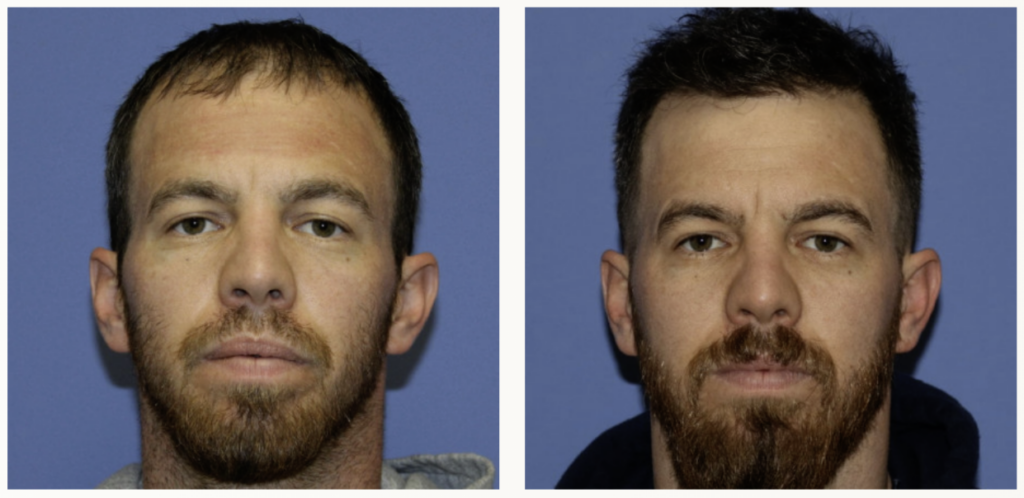
Hair loss can feel personal. It changes the way you see yourself in photos, meetings, and everyday life. For many men and women across the state, exploring a hair transplant Utah option becomes less about vanity and more about confidence, identity, and feeling comfortable again.
If you’ve started researching solutions, you’ve likely come across two primary surgical methods: FUE and FUT. Both offer proven, long-term results. Both can create natural-looking density. Yet they differ in technique, recovery, scarring, and ideal candidates.
This guide walks through the differences between FUE and FUT, what makes someone a good fit for each, and why choosing the right clinic matters just as much as choosing the procedure.
The Scope of Hair Loss in the United States
Hair loss is common—and it’s not just a cosmetic concern.
According to the U.S. National Library of Medicine (NIH), more than 50 million men and 30 million women in the United States experience androgenetic alopecia, commonly known as male or female pattern baldness.
The American Academy of Dermatology reports that hereditary hair loss can begin as early as the late teens or early twenties in men.
Those numbers highlight something important: if you’re dealing with thinning or recession, you’re far from alone.
What Is a Hair Transplant?
A hair transplant is a surgical procedure that moves healthy hair follicles from a donor area—typically the back or sides of the scalp—to thinning or balding areas. Since the transplanted follicles retain their genetic resistance to shedding, they continue to grow in their new location.
Modern procedures focus on natural growth patterns, proper density distribution, and subtle hairline design. The result should look like your own hair—just fuller.
Many people refer to these procedures as hair implants, though the term can be misleading. No artificial implants are used. Instead, your own follicles are relocated with precision.
There are two primary techniques used today: FUE and FUT.
FUE: Follicular Unit Extraction
FUE involves removing individual follicular units one by one from the donor area. Each unit contains one to four hairs. These grafts are then placed into tiny recipient sites in the thinning region.
Benefits of FUE
- No linear scar
- Shorter recovery time
- Ideal for patients who prefer shorter hairstyles
- Minimal post-operative discomfort
- Lower visibility of donor extraction points
Because the grafts are extracted individually, scarring appears as small dots that are difficult to see once healed.
Who Is a Good Fit for FUE?
FUE works well for patients who:
- Want to wear very short hair
- Have mild to moderate hair loss
- Prefer less visible scarring
- Have strong donor density
The technique requires attention to graft placement and angling. Precision during extraction helps preserve donor area density.
FUT: Follicular Unit Transplantation
FUT uses a thin strip of scalp removed from the donor area. The strip is dissected into individual follicular units under magnification. The donor site is then sutured closed, leaving a linear scar.
Benefits of FUT
- Often allows for a higher number of grafts in one session
- Can be efficient for advanced hair loss
- Typically shorter surgical time
- Strong graft survival rates
For patients with significant thinning, FUT may provide the volume needed in a single procedure.
Who Is a Good Fit for FUT?
FUT can be ideal for individuals who:
- Need a large number of grafts
- Wear longer hairstyles
- Have tighter donor skin that supports strip removal
- Want to maximize density in one session
The linear scar is usually concealed under surrounding hair if length is maintained.
Comparing FUE and FUT Side by Side
| Feature | FUE | FUT |
| Scarring | Tiny dot scars | Linear scar |
| Recovery | Shorter | Slightly longer |
| Graft Count | Moderate to high | Often higher in one session |
| Ideal Hair Length | Short or long | Best with longer hair |
| Donor Area Impact | Spread-out extraction | Single strip removal |
Neither approach is “better” for everyone. The best choice depends on your pattern of hair loss, donor density, hairstyle preference, and long-term goals.
The Importance of Clinical Skill
Procedure choice matters—but so does who performs it.
A transplant requires:
- Accurate graft harvesting
- Natural hairline design
- Proper angle and depth placement
- Protection of donor density
- Long-term planning for progressive loss
Hair loss often continues over time. A thoughtful treatment plan accounts for future thinning so results remain balanced years later.
That’s where selecting the right clinic makes a real difference.
Why Choose Utah Hair Restoration?
If you’re exploring hair restoration Utah options, you’ll notice a range of providers offering surgical solutions. The difference lies in experience, technology, patient education, and commitment to outcomes.
Utah Hair Restoration focuses on:
Personalized Treatment Planning
Every patient’s pattern of loss is different. A responsible clinic evaluates scalp condition, donor strength, age, family history, and long-term expectations before recommending FUE or FUT.
Natural Hairline Design
A natural hairline follows subtle irregularities. Straight, artificial lines can look obvious. Thoughtful design creates age-appropriate results that blend with your facial features.
Graft Survival Focus
Proper hydration, handling, and placement of grafts impact long-term growth. Attention to graft care during surgery increases yield and density.
Patient Education
Clear communication about recovery, timeline, and growth stages helps patients know what to expect. Transplanted hair typically sheds within weeks before new growth begins around three to four months post-procedure.
Full results often appear between 9–12 months.
Long-Term Strategy
Hair loss can progress. Planning for future density keeps results looking balanced. Clinics that consider long-term management provide better overall outcomes.
Recovery Expectations
After FUE
- Mild swelling for a few days
- Tiny scabs in recipient area
- Back to non-strenuous work within a few days
- Resume workouts after about one week
After FUT
- Mild tightness in donor area
- Sutures removed in about 10–14 days
- Slightly longer healing time
- Scar concealed once hair grows over it
Post-procedure instructions matter. Proper washing, avoiding sun exposure, and following clinic guidelines support healthy graft growth.
Results Timeline
Patients often feel anxious during the first few months. That’s normal.
- Weeks 1–3: Transplanted hairs shed
- Months 3–4: Early new growth begins
- Month 6: Noticeable thickening
- Months 9–12: Full visible results
Growth occurs gradually. Patience pays off.
Beyond Surgery: Comprehensive Hair Restoration
Surgery works best for permanent pattern hair loss. Yet some patients benefit from additional treatments to maintain native hair.
Options may include:
- PRP therapy
- Topical medications
- Oral prescriptions
- Low-level laser therapy
Combining surgical and non-surgical methods can stabilize ongoing thinning and protect surrounding follicles.
A clinic that evaluates the full picture of your scalp health provides more complete care.
Emotional Impact of Restoring Hair
Hair loss affects confidence. Research published through the National Institutes of Health has linked androgenetic alopecia with reduced self-esteem and increased social stress in some individuals. For many patients, restoring density brings renewed confidence in work and social environments.
Feeling comfortable in your appearance influences daily interactions. A well-executed transplant can make a meaningful difference.
Choosing the Right Fit for You
Here are questions to ask during your consultation:
- How many grafts do I need?
- Am I a candidate for FUE, FUT, or both?
- What will my donor area look like long-term?
- How will my hairline age over time?
- What happens if I lose more hair later?
A clinic that answers these questions clearly shows transparency and confidence in its process.
Making the Decision
FUE suits patients wanting minimal scarring and shorter hairstyles. FUT can provide greater graft volume in one session for advanced loss. Both methods produce natural, permanent growth when performed correctly.
The real difference often comes down to planning, technique, and attention to detail. A clinic that prioritizes artistry and long-term strategy sets the foundation for results that look natural years from now.
Choosing a provider is about trust. You want a team that evaluates your goals, gives realistic expectations, and guides you through every stage—from consultation through full growth.
If you’re considering taking the next step, schedule a consultation with Utah Hair Restoration to explore which option fits your needs.
Discover What’s Possible
Confidence can start with a single conversation.
Call (801) 525-8727 to speak directly with the team and get started.
Your future hairline deserves thoughtful planning and skilled execution. Reach out today and discover what’s possible with Utah Hair Restoration.