

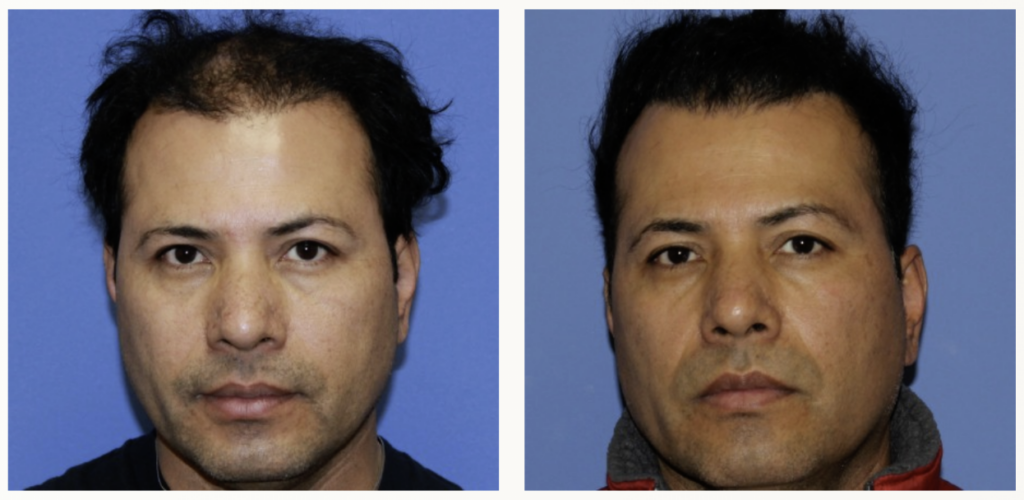
Losing your hair changes things in ways that are hard to articulate to people who haven’t experienced it. It shows up in the mirror every morning, in photos you’d rather not look at, and in quiet moments of self-consciousness you never asked for. For many people, that ongoing experience becomes the motivation they need to seriously explore what hair surgery actually looks like — from the very first consultation all the way through full recovery and beyond.
This guide walks you through the entire process, step by step, so you can approach the decision with clarity and confidence. The goal here isn’t to sell you on anything — it’s to give you the kind of detailed, accurate information that helps you make the right call for your specific situation. And if you’ve been considering your options in Utah, it’s worth knowing what sets exceptional providers apart from the rest.
Starting With an Honest Assessment: The Consultation
Before any procedure takes place, a reputable provider sits down with you for a thorough consultation. This is where candidacy gets evaluated. Your hair loss pattern, scalp health, donor area density, age, and realistic outcome expectations are all part of the conversation. A good consultation takes time — and it should. Anything that feels rushed or surface-level is a red flag worth taking seriously.
One of the most frequent reasons people seek hair restoration is male hair baldness pattern, a hereditary condition driven largely by sensitivity to dihydrotestosterone (DHT). The follicles in affected areas gradually miniaturize over time, producing thinner, shorter strands before eventually stopping production altogether. According to MedlinePlus, a trusted health resource maintained by the U.S. National Library of Medicine, androgenetic alopecia affects an estimated 50 million men and 30 million women in the United States alone — and the risk increases steadily with age, with more than 50 percent of men over 50 experiencing some degree of hair loss. That statistic puts the scope of this condition into perspective — and makes clear that seeking out solutions is far more common than most people realize.
The consultation stage is also where questions like how much does it cost for hair transplant procedures get addressed directly. Pricing varies based on the number of grafts needed, the technique used, the complexity of the case, and the provider’s level of skill and experience. A trustworthy clinic won’t give you a number over the phone without first evaluating your scalp — they’ll assess your specific needs and build a plan around them. Transparency at this stage is a strong signal of how the entire experience will go. Providers who are upfront about costs, timelines, and limitations before you’ve committed to anything are the ones worth your time.
Choosing Your Technique: FUE vs. FUT
Two primary methods dominate modern hair restoration: Follicular Unit Excision (FUE) and Follicular Unit Transplantation (FUT). Both are proven, effective techniques — and both have different advantages depending on the patient.
FUE involves harvesting individual follicular units from a donor area — typically the back or sides of the scalp — and placing them into thinning or bald regions. There’s no linear scar left behind, healing tends to be faster, and patients can wear their hair short without visible evidence of a procedure. It’s a popular choice for patients who want flexibility and minimal visible recovery markers.
FUT involves removing a thin strip of scalp tissue from the donor area, from which grafts are then carefully dissected under magnification before placement. The trade-off is a linear scar in the donor region, but FUT can be a strong option for patients who need a larger volume of grafts in a single session. In skilled hands, the scar from FUT becomes virtually invisible once the surrounding hair grows back in.
Neither technique is universally superior — the right choice depends entirely on your anatomy, goals, lifestyle, and the number of grafts your restoration plan requires. A skilled provider presents both options honestly, explains the trade-offs clearly, and helps you make a fully informed decision rather than steering you toward whatever’s most convenient for their workflow.
What Happens the Day of Your Procedure
On procedure day, patients are awake and comfortable throughout the session. Local anesthesia is applied to both the donor and recipient areas, minimizing discomfort significantly. Oral sedation is sometimes offered to patients who want to feel more at ease, though general anesthesia is not standard for these procedures.
The process can run anywhere from four to eight hours, depending on the number of grafts being transplanted. For men hair transplant procedures, hairline design is one of the most artistically demanding parts of the process. It needs to look natural right now and decades from now as the aging process continues. A well-designed hairline accounts for the natural direction, angle, and density of your existing hair, and it anticipates how your hairline might shift as you get older. This kind of long-term thinking separates excellent providers from average ones.
Patients often describe the day as far more manageable than expected. There’s no overnight hospital stay, no general anesthesia, and most people feel relaxed enough to listen to a podcast or watch something during the session. Knowing what to expect ahead of time takes a significant amount of uncertainty out of the experience and makes the day itself far less intimidating.
The Recovery Timeline: What to Expect Week by Week
Recovery moves in stages, and knowing what’s normal makes a meaningful difference in how patients experience those first weeks and months after their procedure.
Week 1: Some redness, swelling, and minor scabbing in both the donor and recipient areas are completely expected and normal. Sleep with your head slightly elevated, avoid touching or rubbing the grafts, and stay out of direct sunlight. Activity restrictions during this period are minimal, though strenuous exercise should be avoided for at least the first week to protect the grafts.
Weeks 2–4: The transplanted hairs will begin to shed — this is referred to as shock loss, and it’s a standard part of the biological process. It can look discouraging if you’re not prepared for it, but the follicles themselves remain alive and intact beneath the scalp surface. Shedding is not the same as losing the grafts.
Months 3–6: New growth begins to emerge. This is where recovering hair becomes visible for most patients, with fine, soft strands gradually appearing across the treated areas. Progress is slow and incremental during this window, and patience becomes part of the process.
Months 6–9: Growth accelerates noticeably, and density becomes more apparent. Patients often begin to see meaningful change during this phase. The texture of new growth continues to normalize, and the hair begins to behave more like the rest of your existing hair.
Months 9–18: Full results come into focus. Density increases, the hairline settles, and the final outcome becomes clear. Most patients reach their complete result within 12 to 18 months post-procedure. Results achieved through hair restoration are permanent — the transplanted follicles are resistant to the DHT sensitivity that caused the original loss, meaning they continue growing for life.
Why Your Provider Makes All the Difference
A hair transplant is a permanent decision. The grafts placed during your procedure are there for life — which means the skill, artistry, and clinical integrity of the team performing it directly determines what you live with going forward. This is not a decision to make based on price alone or on the strength of a social media advertisement.
Research published through CiteSeerX — an academic research repository maintained by Penn State University — found that in a study of 100 consecutive hair transplant patients, 98% of participants rated their preoperative consultation as “excellent to good,” and overall patient satisfaction reached 86%, with zero patients rating their experience as “poor.” The researchers concluded that managing expectations through detailed pre-procedure counseling is one of the most significant contributors to positive patient outcomes — not just surgical technique alone.
This is where the difference between a clinic that treats restoration as a transaction and one that sees it as more than just hair becomes unmistakable. The best providers take the time to learn your story. They ask about your lifestyle, your goals, and what confidence means to you in your daily life. They’re transparent about what’s achievable and honest when expectations need to be recalibrated. They communicate clearly, follow up consistently, and treat every patient’s outcome as a direct reflection of their own standards.
Addressing Common Concerns Before You Commit
Many people sit on the idea of hair restoration for years, held back by a mix of questions, doubts, and not knowing where to start. A few things worth knowing up front before you make any decisions:
Pain levels are consistently reported as much lower than expected by patients who have gone through the process. Local anesthesia handles the procedure itself, and over-the-counter pain relief is typically sufficient to manage any discomfort in the days that follow.
Results look natural when the procedure is performed correctly. The era of obviously transplanted, plug-like hairlines is long behind us. Modern techniques produce growth that integrates seamlessly with existing hair — and looks the way hair is supposed to look.
Timing matters more than most people realize. Earlier intervention generally means more donor hair to work with and a more conservative, natural-looking result. Waiting too long can limit available options.
Follow-up care is a genuine part of the process. Good clinics stay engaged with patients through the full recovery arc, not just until the procedure itself is complete. Post-procedure communication and check-ins are a sign of a provider who’s invested in your outcome.
Going From Thinning to Winning
For patients who have spent years avoiding mirrors, skipping photos, or adjusting their style to work around their hair loss, the transformation after a successful restoration is significant — and it goes well beyond aesthetics. The shift from thinning to winning is as much emotional as it is physical. Patients consistently report higher confidence, greater ease in professional and social situations, and a renewed sense of ownership over how they present themselves day to day.
That kind of outcome doesn’t happen by accident. It happens when technical skill, careful planning, genuine investment in the patient’s experience, and long-term thinking all come together in the same room. It happens at clinics that hold themselves to a higher standard because they understand what’s truly at stake for the people sitting in their chair.
What Sets the Best Providers Apart
Not all hair restoration clinics are created equal. The difference between a good outcome and a great one often comes down to how the team operates before and after the procedure — not just during it.
The best clinics bring a combination of technical precision, artistic judgment, and deep patient investment to every case. They never cut corners on graft handling. They design hairlines with an eye toward the long term. They educate patients at every step so there are no surprises. And they’re honest — even when honesty means telling someone that their expectations need to be adjusted before moving forward.
These aren’t simply nice-to-haves. They’re the standards that separate providers who produce results patients are proud of years later from those who fall short when it matters most.
Why Utah Patients Choose Utah Hair Restoration
Patients across the state choose Utah Hair Restoration for a reason — several, in fact. From the first consultation through every post-procedure follow-up, the team prioritizes transparency, artistry, and results that hold up over time. The clinic uses proven techniques, approaches every patient as an individual with a specific situation, and commits to the kind of long-term relationship that produces outcomes patients are genuinely proud of — not just immediately after the procedure, but years down the road.
If you’ve been weighing your options, sitting on the fence, and wondering whether now is the right time — consider this your cue to have a real conversation with a team that gives honest answers and builds a clear, personal path forward. There’s no pressure to commit. Just real information, from a team that takes your result as seriously as you do.
Take the Next Step
You’ve done the research. Now it’s time to move forward with confidence.
Call (801) 525-8727 to speak directly with a member of our team, ask your questions, and get clear, pressure-free answers right away.
Chat with us right now — a live team member is available and ready to help you figure out the best next step for your specific situation.
Fill out our contact form, and we’ll reach out to schedule your consultation at a time that fits your schedule.
Your restoration story starts with one conversation. Utah Hair Restoration is ready when you are.